
If your mind runs commentary like a second job, classic advice to clear your thoughts can feel insulting. Mindfulness for overthinkers is different. It does not demand silence or a blank mental desktop. It teaches you how to relate to the noise without feeding it every spare minute between tasks, messages, and late night ceiling stares.
Overthinking is often a strategy that once helped you stay prepared, polite, or safe. The practice is learning when preparation has tipped into rehearsal that never ends, and when your attention can come back to the room you are actually in, with the body you are actually in.
What overthinking wants from you
Most loops are trying to create certainty. Certainty rarely arrives on schedule. Mindfulness offers contact with the present instead of a finished answer, which can feel unsatisfying at first and useful later when you notice you survived without solving every branch of the tree.
- Name the loop type: planning, replaying, predicting, comparing, or rehearsing conversations.
- Ask what the loop is protecting you from feeling. Often it is discomfort, awkwardness, or unfinished emotion, not immediate danger.
- Give the loop a time box. Ten minutes of planning with a timer is different from an afternoon of drift with no edges.
- Notice body clues: tight jaw, held breath, scrolling without reading. The body often announces the loop before the mind admits it.
- Ask whether more thinking has produced a new fact in the last ten minutes. If not, you are spinning, not researching.
Practices that work with thoughts instead of against them
Fighting thoughts often strengthens them. These approaches step beside the stream and give you something else to hold while the water keeps moving.
- Label and leave: think planning, then return to feet or breath. The label is enough. No debate with the content.
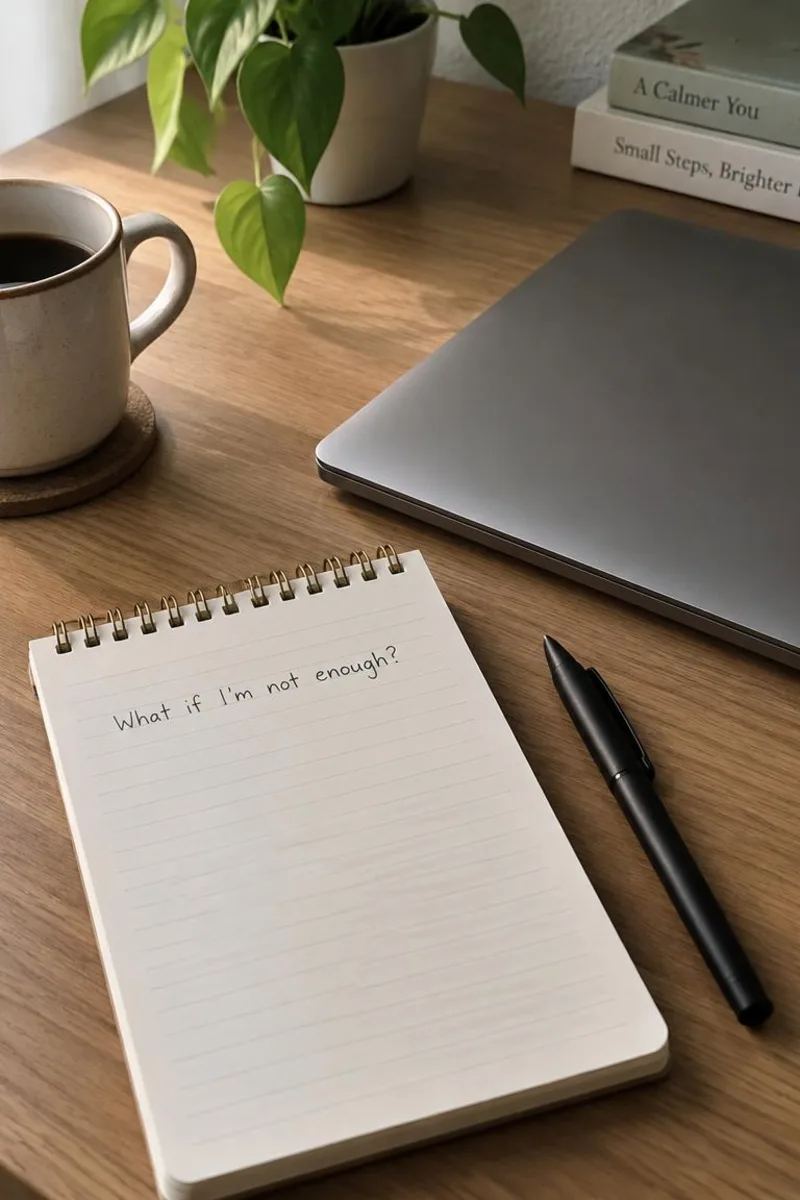
- Parking lot note: write the worry in one line, then close the note until a scheduled worry window later.
- Sensory interrupt: name five things you see, four you feel, three you hear. Detail crowds out abstraction.
- Breath with a job: inhale for the question, exhale for not now. Keep it light so it does not become another performance.
- Body first: shoulders and jaw before you analyze the day again. Shift the channel before you rewrite the script.
- Object focus: choose one ordinary object and describe it for sixty seconds like a reporter. Specificity settles spin.
- Walking reset: two blocks with attention on footsteps before you reopen the mental case file.
Rules that reduce fuel for the loop
- No problem solving in bed after lights out. Park it for morning with one written line if needed.
- One re read limit on messages you already understood. Extra passes rarely add clarity.
- Decide the next physical action, not the whole future. Actions are smaller than scenarios.
- Talk it out once with a trusted person, then return to a practice instead of replaying the talk for hours.
- Separate useful planning from recreational worrying. Useful planning has an end time and a next step.
- Limit advice shopping. Five opinions can create five new loops.
A short overthinker session you can run anywhere
Try this five minute sequence when the loop is loud and you still have a day to finish.
- Minute one: write the loudest thought in one sentence. No paragraphs.
- Minute two: longer exhales, six rounds, feet on the floor.
- Minute three: feet and hands attention, noticing contact and temperature.
- Minute four: choose one next action under ten minutes that moves life forward.
- Minute five: start that action before the narrator reopens the case file.
If five minutes is too much, do minutes one and five. Capture and move. That alone interrupts many loops that were waiting for an audience inside your head.
Workplace loops and public composure
Overthinking loves open offices and group chats. You can practice without looking like you left the meeting.
- Under desk finger count: five breaths before you unmute.
- One sentence summary: write what you actually need to say, then say only that.
- After feedback: parking lot note first, reply second, preferably after a short walk.
- End of day shutdown: list three unfinished items, pick tomorrow first step, close the laptop on purpose.
Public composure is not fake calm. It is choosing a smaller next move while the mind keeps offering bigger movies. You can be thoughtful without becoming a twenty four hour simulation lab for every possible outcome.
When mindfulness feels like more thinking
If your practice becomes another place to evaluate yourself, simplify hard. Count breaths. Feel contact points. Stop analyzing whether you are mindful enough. The return after distraction is the skill, and overthinkers get lots of practice at returning because distraction arrives often and with costumes.
Also watch for spiritualized overthinking: reading endless technique lists without practicing any. Pick one tool for a week. Boredom with a simple tool is often a sign it is working, not a sign you need a more elaborate system with better branding.
A kinder definition of progress
Progress might look like noticing the loop two minutes earlier than last month. It might look like sending a message once instead of drafting it six times. It might look like falling asleep after parking a thought instead of arguing with it until dawn. It might look like choosing lunch without a committee meeting in your skull.
Mindfulness for overthinkers is not a personality transplant. It is a set of exits from the loop that you can find in ordinary rooms. Use the exits often. Let the mind be busy while you still choose where to put your attention next. That choice, repeated on imperfect days, is the practice, and it counts even when the thoughts keep talking.