A messy desk is not a personality flaw. It is visual noise that makes starting harder than the work itself. These desk organization hacks are for people who need focus, not a showroom. Think resets you can finish in minutes, habits that survive a real Tuesday, and layouts that make the next task obvious.
You do not need new furniture. You need fewer decisions between you and the first useful click or pen stroke.
Start with a 10-minute desk reset
Set a timer. Move fast. Sort into four temporary zones on the floor or a chair:
- Stay on desk: daily tools only.
- Park nearby: useful this week, not every hour.
- Leave the room: papers, gadgets, and gifts that belong elsewhere.
- Trash or recycle: obvious junk, dried pens, ancient sticky notes.
When the timer ends, put the Stay pile back with intention. Everything else can wait five more minutes after you work. A clear surface beats a perfect filing system you never finish.
The one-surface rule
Give yourself one primary work rectangle. Laptop or monitor zone, keyboard zone, notebook zone. If an object does not serve this week’s tasks, it does not live on that rectangle.
Good Stay-on-desk candidates:
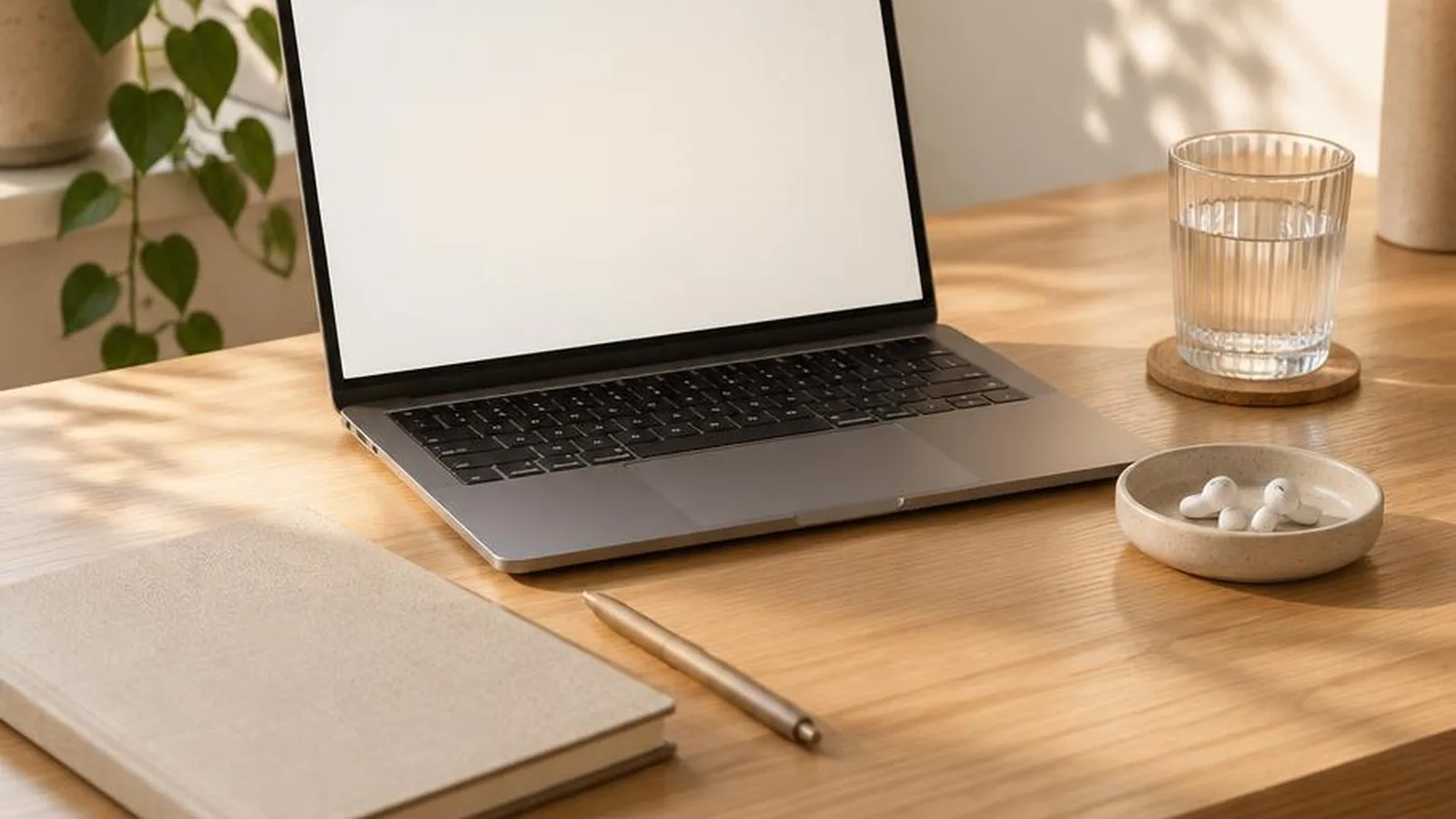
- Computer and charger path that does not tangle your writing hand.
- One notebook and one pen that always works.
- Water bottle or mug on a coaster.
- Headphones if you use them daily.
- A small tray for the floating items that otherwise migrate everywhere.
Anything sentimental can sit on a shelf in sight. Sight is not the same as in the way.
Kill visual noise before you buy organizers
Containers help after you subtract. Try subtraction first:
- Remove duplicate chargers from the desktop. Keep one path plugged and labeled under the desk if needed.
- Turn stacks into a single upright file or a clipboard for active papers only.
- Hide cable spaghetti with a simple clip path along the desk edge.
- Take everything off the monitor base except dust.
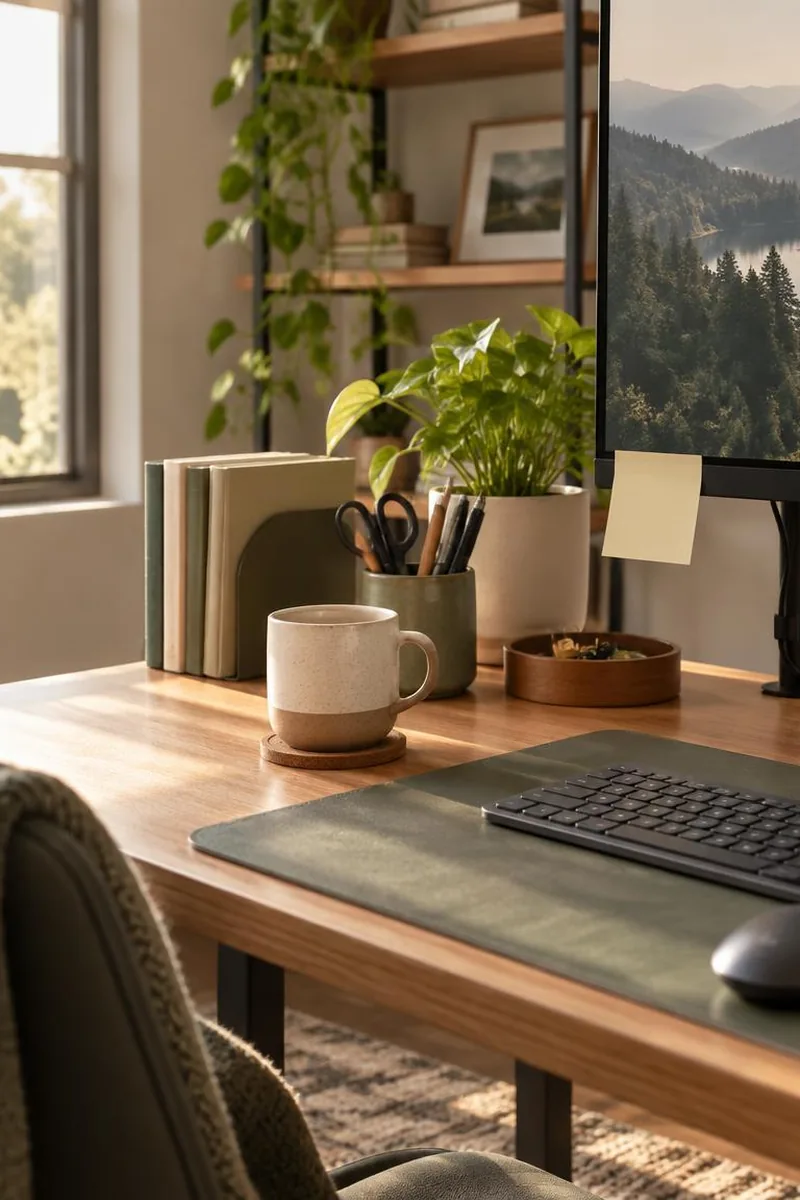
- Choose one accent object max: plant, lamp, or photo, not all three fighting for attention.
Your eyes should land on the task, not a museum of unfinished intentions.
Make starting automatic with a landing pad
Focus dies in the first ninety seconds of hunting. Create a landing pad you reset at the end of each day:
- Tomorrow’s top task written on a sticky note centered above the keyboard.
- The file, tab, or notebook already open or marked.
- Phone on a spot that is reachable but not in your primary eyeline.
- Desk surface wiped once so crumbs do not become a project.
Morning-you should only have to sit down and begin.
Paper without the shame pile
Paper still shows up: school forms, receipts, printouts, mail. Use a three-slot habit:
- Act: needs a response this week.
- File: keep, but not on the desk.
- Shred or recycle: decided in under ten seconds.
Process Act every Friday in fifteen minutes. If a paper sits through two Fridays, it is either done or it needs a calendar task, not another stack.
Digital clutter counts as desk clutter
A clean desk with forty chaotic windows is still noisy. Pair the physical reset with a light digital one:
- Keep one full-screen or two-pane layout for deep work.
- Park chat apps until a scheduled check, if your role allows.
- Use a single notes inbox for random thoughts so they leave your brain and leave your desktop sticky forest.
- Close the browser windows that belong to yesterday’s rabbit hole.
- Rename the desktop files that scare you so they stop shouting Untitled.
Your desk and your screen should tell the same story: here is the work.
Home desk vs office desk: same principles
At home, kitchens and couches leak into the work zone. Add a boundary prop: a lamp you only turn on for work, a mat under the chair, or a small sign-off ritual where the laptop closes and the tray gets reset.
In a shared office, protect focus with portable order:
- A pencil case that holds your daily kit so you can clear fast.
- Noise tools you actually use: earbuds, not a fantasy of silence.
- A habit of leaving the desk reset even when the day was messy, so tomorrow is kinder.
Tiny habits that keep the desk from sliding back
Organization fails when it is a weekend project and never a daily close.
- Two-minute close: dishes off desk, trash grabbed, sticky note updated.
- Friday bag dump: clear the bag or drawer that collects mystery items.
- One-in, one-out for desk gadgets. New mousepad means the old one leaves.
- Standing reset after long calls: stand, stretch, put the mug in the kitchen, return.
- Photo your clear desk once. When it drifts, match the photo instead of reinventing a system.
Focus-friendly layout cheat sheet
If you like a simple map:
- Center: screen and keyboard.
- Dominant-hand side: pen, notebook, mouse.
- Other side: water and tray.
- Above screen: one task note only.
- Below or beside: bag and shoes out of ankle range so your body stays calm.
Comfort is part of focus. A chair that digs into you will beat any pretty organizer.
When the mess is emotional
Sometimes the desk piles up because the work feels heavy. If that is you, shrink the target. Clear only the keyboard zone. Write one next action. Begin there. Order can follow energy, and energy often returns after one honest start.
Clear a square. Start the next task. Let the rest wait without guilt.
My desk does not need to be aesthetic. It needs to make starting easy.
Visual quiet is a focus tool, not a personality makeover.
Keep the hacks small enough to repeat on your worst week. That is how a desk stops arguing with your attention and starts helping you work.