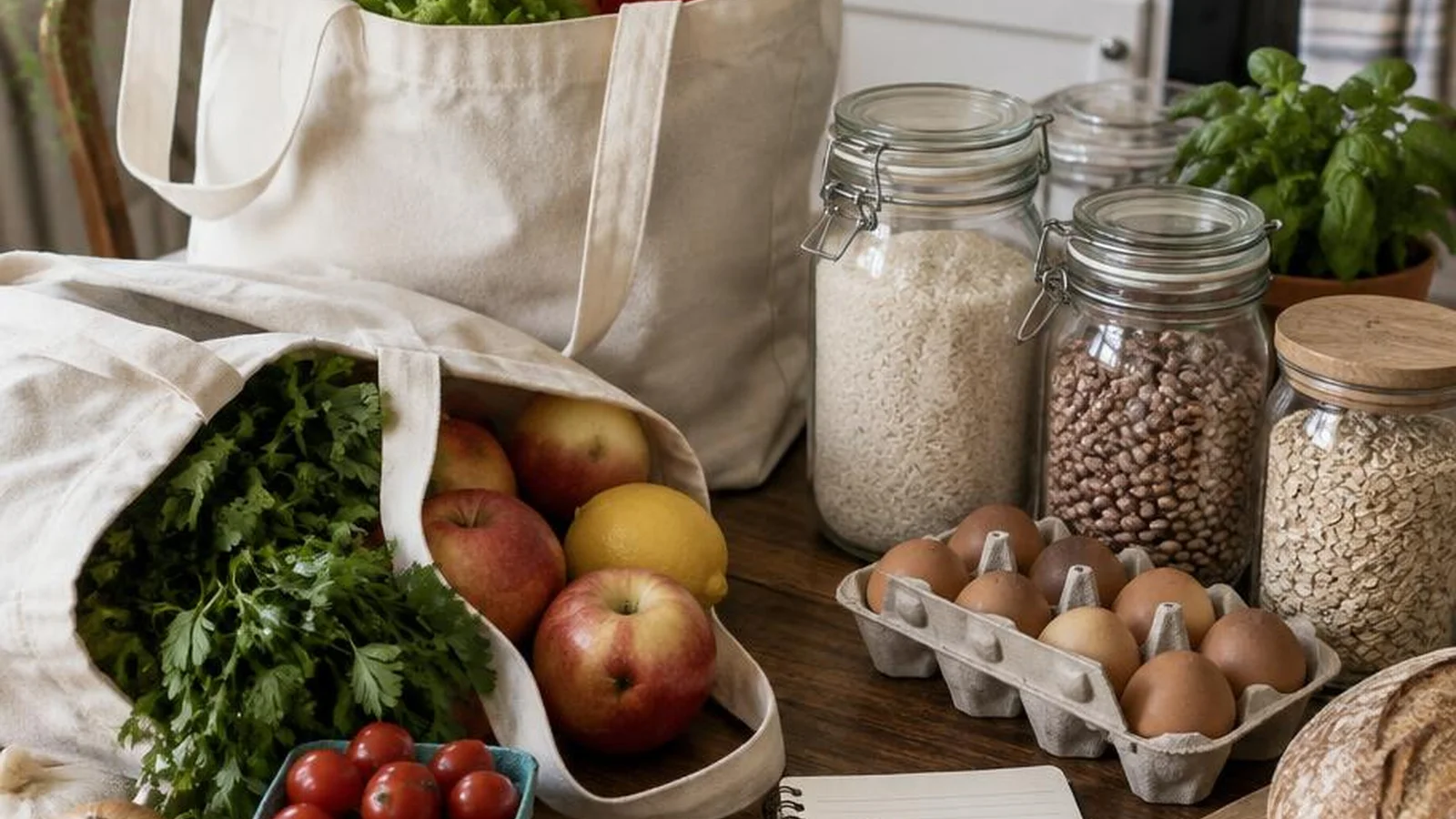
Budget grocery shopping is not about eating sad food. It is about buying with a plan that survives a tired Tuesday. Coupons help sometimes. Habits help more: a list tied to meals, a fridge that tells the truth, and a store route that limits impulse theater.
These hacks work for solo shoppers, families, and anyone who has ever brought home three kinds of cheese and no bread. Use what fits your store and your week. The win is dinner that happens, not a perfect spreadsheet.
Start in the kitchen, not the aisle
The cheapest groceries are the ones you already own and actually eat.
- Open the fridge, freezer, and pantry for five minutes before you write a list.
- Move eat first items to eye level.
- Build two to four dinners around what is already there.
- Only then list the missing pieces: produce, dairy, protein, staples.
- Snap a quick pantry photo if you forget easily while walking aisles.
A shopping list that ignores inventory is how you buy a second soy sauce.
The tiny meal map
You do not need a laminated meal-prep empire.
- Pick themes: pasta night, sheet-pan night, beans and rice night, leftovers remix.
- Repeat favorites on purpose. Novelty is expensive when cash is tight.
- Plan one flexible meal that can absorb sad vegetables at the end of the week.
- Leave one night open for leftovers or eggs so the plan can breathe.
- Keep a backup pantry meal that needs no fresh produce: tuna pasta, egg fried rice, bean quesadillas.
Write the map on a note in your phone. Shop from the map, not from hunger vibes.
List rules that block impulse spend
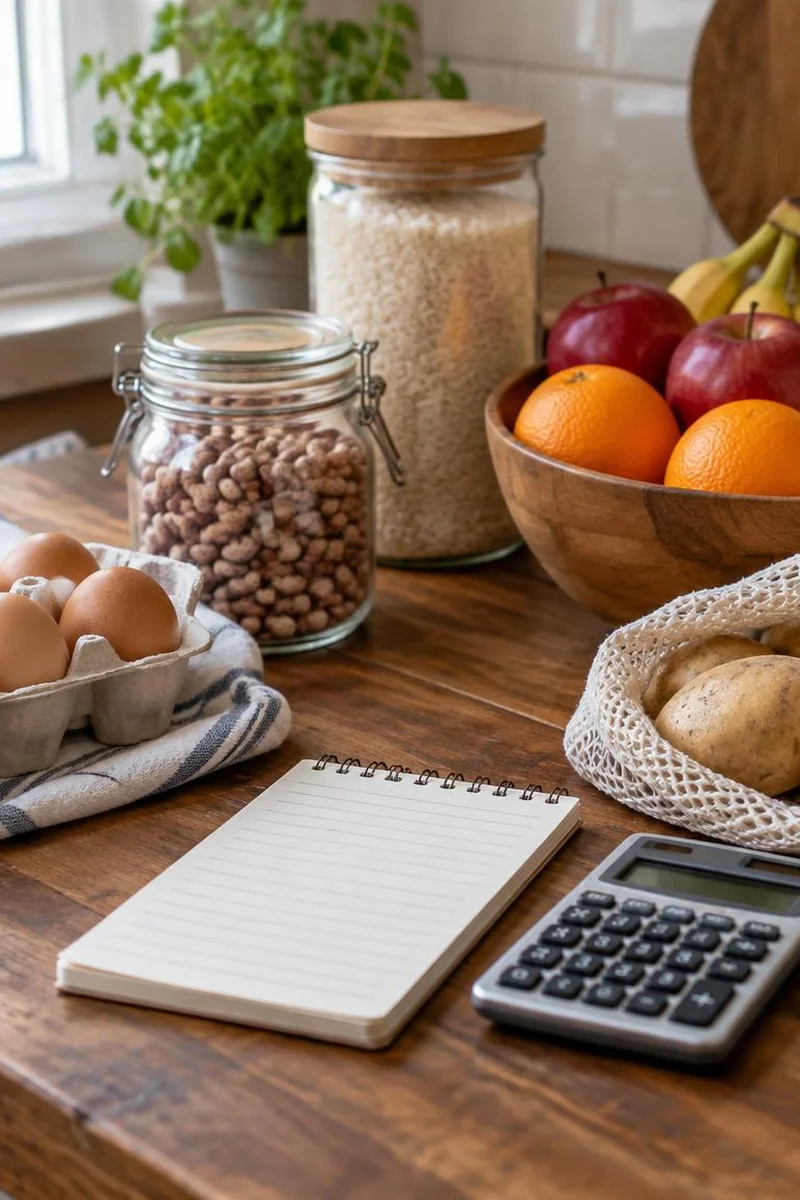
- Organize the list by store section: produce, dairy, center aisles, frozen.
- Add a maybe line for one treat so restriction does not explode into five treats.
- Shop after a snack. Hungry carts are generous in the wrong direction.
- If you shop with kids or a chatty friend, stick to a time cap.
- Set a soft total in your head before you enter so surprise upgrades have to justify themselves.
Online grocery carts help too. You can sort, delete, and sleep on the total overnight.
Unit price and store brand without snobbery
The big number on the shelf is not always the real deal.
- Look at price per ounce or per pound when comparing sizes.
- Try store brands for staples: oats, beans, milk, flour, frozen vegetables, canned tomatoes.
- Pay for name brands only where taste or performance truly matters to you.
- Skip giant bulk buys unless you will finish them before quality dies or storage space riots.
A cheap giant bag you throw away is not thrift. It is delayed trash.
Protein and produce on a budget
- Rotate cheaper proteins: eggs, beans, lentils, tofu, chicken thighs, canned fish.
- Buy meat on sale and freeze flat in meal-sized packs the same day.
- Choose produce that lasts: cabbage, carrots, onions, apples, citrus, potatoes.
- Use frozen produce freely. It is often picked ripe and priced kindly.
- Whole fruits beat tiny snack packs when you will actually wash and cut them.
Seasonal produce is a guideline, not a religion. Buy what you will finish.
Center-aisle strategy
The middle of the store is where budgets go to daydream.
- Walk those aisles with a list, not a mood.
- Limit yourself to one new snack experiment per trip.
- Check your pantry photo if you cannot remember whether you still have pasta.
- Avoid endcap urgency unless the item was already on the list.
Marketing is a skill. Your list is a shield.
Checkout and receipt habits
- Watch the screen for wrong prices on sale items.
- Use store loyalty prices when they are free and not spammy beyond reason.
- Snap a photo of the receipt if you track spending weekly.
- Unpack into clear homes at home so food does not vanish into the void drawer.
A five-minute unpack prevents the forgotten cilantro funeral.
Waste-cutting kitchen moves after you shop
- Wash and prep a few items the day you buy them if that helps you eat them.
- Cook a big batch of grains or beans for the week.
- Freeze bread extras and leftover herbs in oil in ice trays if you cook that way.
- Label leftovers with dates.
- Repurpose leftovers on purpose: roast chicken becomes tacos, leftover rice becomes breakfast bowls.
Budget wins often happen after the store, when food actually becomes meals.
When money is especially tight this week
- Build menus from pantry first: pasta plus eggs, rice plus beans, oatmeal plus fruit.
- Choose one store. Multi-store hunting costs time and gas.
- Skip specialty drinks and buy ingredients for cheaper versions at home when you can.
- Ask for help if food access is the real issue. Local pantries exist for exactly this.
Pride is expensive. Feeding yourself is the assignment.
A simple weekly grocery rhythm
- Sunday or whichever day you restock: inventory, tiny meal map, list.
- One main shop. One tiny top-up midweek for milk, fruit, or greens if needed.
- Friday: fridge cleanout meal.
- Monthly: check freezer inventory so ancient bags stop hiding behind ice.
That rhythm keeps spending predictable without turning dinner into a spreadsheet hobby. Budget grocery shopping is mostly attention, timed before hunger, aimed at meals you will truly cook. Keep the map small, trust store brands for staples, and let leftovers be part of the plan instead of an accident.
If a trip goes sideways, reset on the next one. One overspend does not erase the habit. Return to inventory, map, and list, and the cart gets quieter again.