A tiny kitchen is not a personality flaw. It is a layout problem with workable fixes. You do not need a renovation, a pantry the size of a closet, or a cart full of gadgets. You need a few systems that reclaim inches, cut decision fatigue, and keep cooking from feeling like a puzzle every night.
These hacks are for apartments, dorm-adjacent setups, shared houses, and anyone cooking around a dishwasher door that never fully opens. Steal two ideas this week. Ignore the rest until the first ones stick.
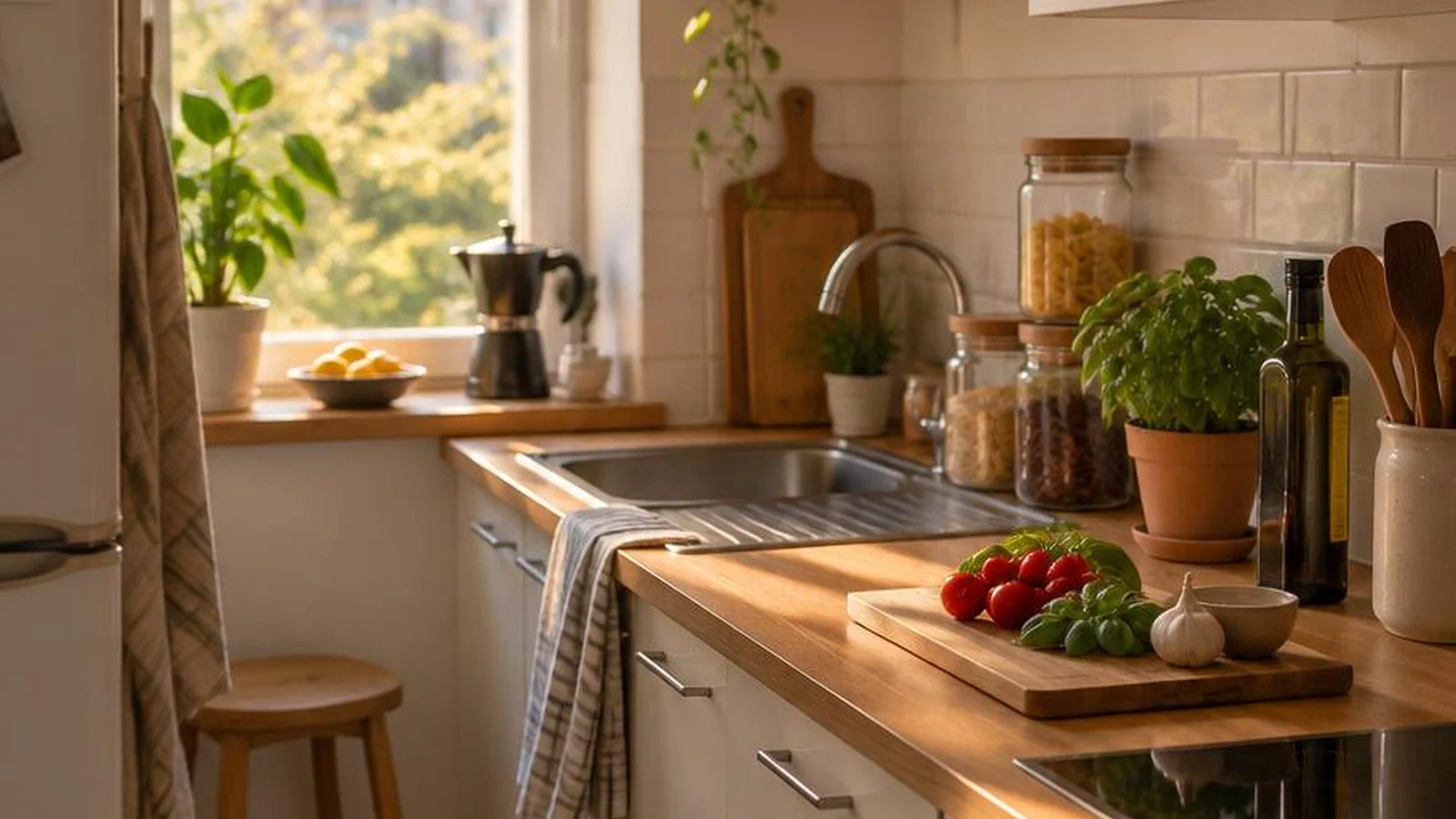
Audit the counter like it is rent
Counters in small kitchens are the real estate market. Everything that lives there should earn its spot daily.
- Clear everything off one counter for five minutes. Wipe it. Put back only what you used in the last three days.
- Park daily tools in one tray: oil, salt, pepper, spatula, and a knife you actually reach for.
- Move appliances you use weekly or less into a lower cabinet or on a high shelf.
- Give the kettle or coffee maker a permanent corner so it stops migrating into prep space.
- Keep a fold-flat cutting board upright between the fridge and wall if that gap exists.
Empty counter space is not wasted. It is your prep station and your calm.
Go vertical before you buy another organizer
Walls and the backs of doors hold more than you think.
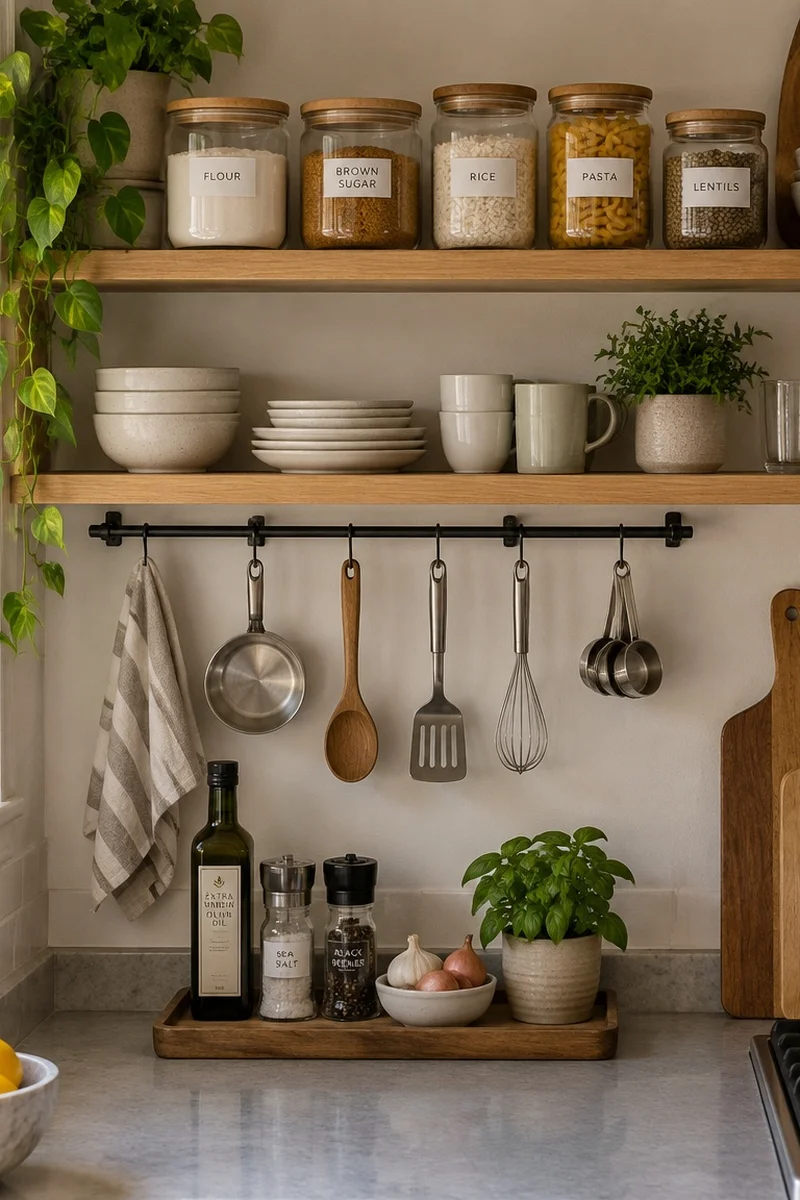
- Hang a simple rail or magnetic strip for knives and scissors if your landlord allows it.
- Use the inside of a cabinet door for measuring spoons, lids, or a small notepad.
- Stack shelves inside cabinets so cans sit two levels high without becoming a landslide.
- Store baking sheets and cutting boards upright in a slim file-style stand.
- Put hooks under a shelf for mugs if cupboard space is the bottleneck.
If you cannot drill, tension rods, removable hooks, and over-door racks still count.
The one-zone cooking method
Tiny kitchens punish you for cooking like you have three free counters. Cook in zones instead.
- Zone A is prep: board, knife, bowl for scraps.
- Zone B is heat: stove or microwave, plus one resting plate.
- Zone C is finish: plates or containers ready before food is done.
Wash the board between steps if you only have one. It is slower for thirty seconds and faster for the whole meal because you are not hunting for space mid-sizzle.
Fridge and freezer rules that free capacity
Crowded fridges make you buy duplicates and waste food.
- Use clear bins by category: leftovers, sauces, snacks, produce that needs eating.
- Label leftovers with the day you cooked them using masking tape.
- Freeze flat: soups and sauces in zip bags laid flat, then stand them like files.
- Keep a eat first shelf at eye level for anything that expires soon.
- Store herbs like flowers in a jar of water, or wrap leafy greens in a slightly damp towel inside a box.
A weekly five-minute fridge reset prevents the mysterious container era.
Pantry that fits a single cabinet
You can run a useful pantry from one cabinet if you stop stocking for imaginary dinner parties.
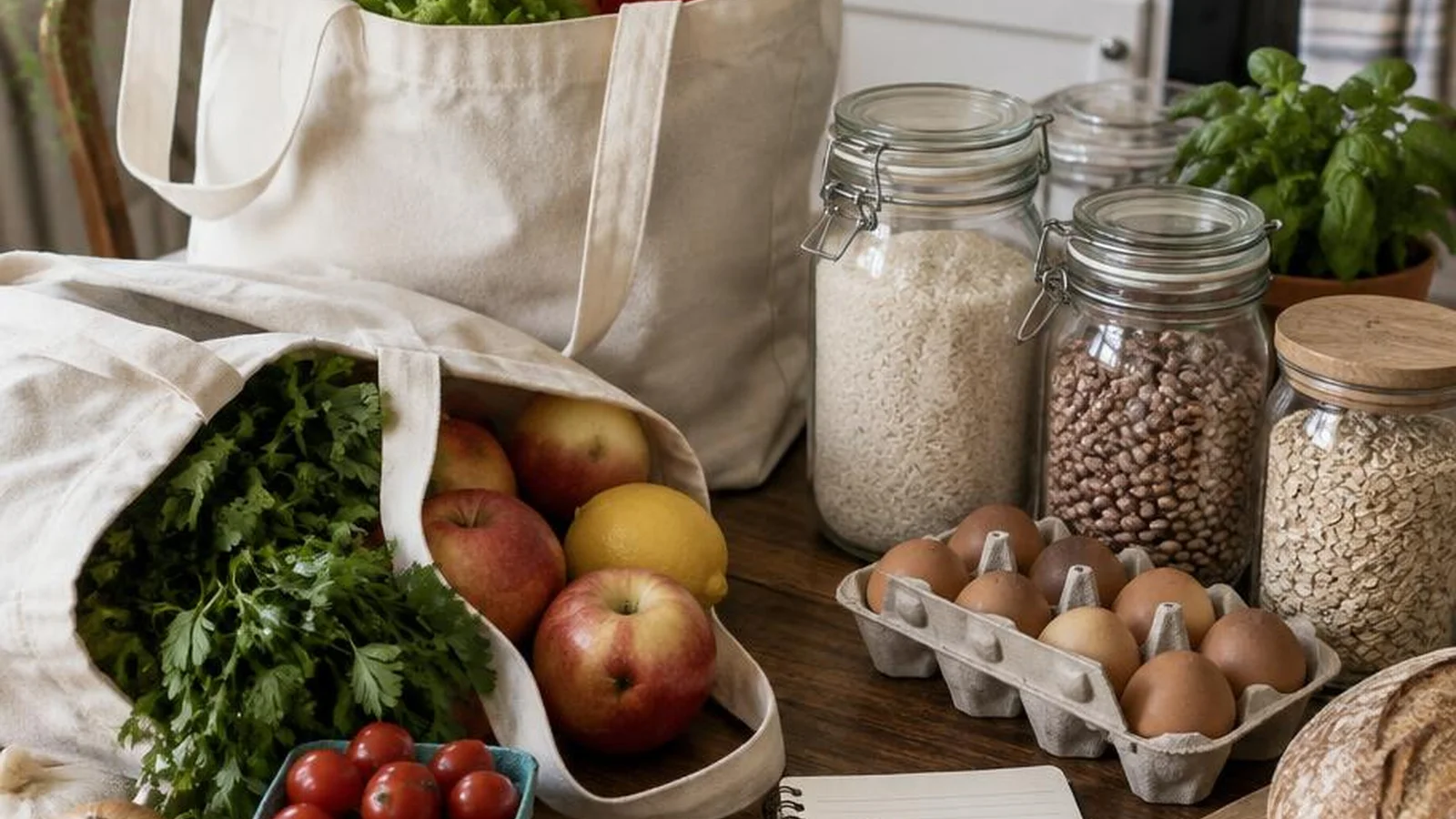
- Keep a core list: rice or pasta, one grain, beans, canned tomatoes, stock, oil, vinegar, spices you use weekly.
- Decant only what you buy often. Jars look nice, but they are optional.
- Put heavy items low and light items high.
- Turn cans so labels face out. Future you will thank present you at 6:40 p.m.
- Write a mini inventory on the inside of the door: what you have, what you are out of.
Shop from that list. Tiny kitchens punish impulse bulk buys.
Dish and sink hacks that stop the pile
In small spaces, dirty dishes erase the whole room.
- Wash as you go for the biggest tool after each step.
- Keep a basin or half-sink for soak so the other half stays usable.
- Dry with a slim rack that folds, or a towel on the oven handle overnight.
- Run a two-song reset after dinner: dishes, wipe, trash.
- If you share the kitchen, agree on a empty sink before bed rule that is about sleep, not perfection.
A clear sink makes a tiny kitchen feel twice as big the next morning.
Cooking shortcuts that respect limited burners
One or two burners is enough for good food if you sequence smart.
- Boil water first while you chop.
- Sheet-pan dinners: roast protein and vegetables together when the oven is free.
- One-pot pasta and skillet meals that leave you with one pan, not five.
- Microwave vegetables while the main cooks on the stove.
- Batch a base on Sunday: cooked grains, roasted veg, shredded chicken, or a big pot of beans.
Reuse bases all week with different sauces so variety does not require new cookware every night.
Trash, recycling, and compost without drama
Waste systems fail in small kitchens when they are afterthoughts.
- Use a slim bin that tucks beside the lower cabinets.
- Hang a small bag for soft plastics if your city needs separation.
- Empty food scraps daily so smells do not take over the room.
- Keep spare bags under the bin so replacement is automatic.
If compost is a goal, a tiny lidded pail on the counter beats a noble plan you never open.
Shared kitchen scripts that reduce friction
Roommates and partners need systems more than speeches.
- Label one shelf each for personal snacks.
- Agree on a shared staples list and who restocks oil, soap, and sponges.
- Post a simple wipe after cooking expectation near the stove.
- Use kind, short scripts: I need the board for ten minutes, then it is yours.
Clarity beats silent resentment in a space where elbows already compete.
A tiny-kitchen weekly rhythm
Keep maintenance boring and short.
- Daily: two-song dish and wipe reset.
- Midweek: fridge eat first check.
- Weekend: wipe shelves you can see, take out recycling, restock three staples.
That is enough. You are not running a restaurant. You are feeding a life.
What to skip
Skip the upgrades that create clutter:
- Specialty tools you will use twice a year.
- Matching container sets that do not fit your cabinets.
- Open shelving if dust and visual noise stress you.
- Any hack that requires a perfect morning to maintain.
Tiny kitchens reward boring consistency. Reclaim the counter, cook in zones, wash as you go, and let the room stay small without feeling impossible.