Afternoon anxiety rarely waits for a quiet room. It shows up after lunch, before a call, or while you reread the same email for the fourth time. Breathing exercises for anxious afternoons work because they travel well. You do not need a cushion, a playlist, or a free hour. You need a pattern you can remember when your thoughts start sprinting and your chest feels tight under a shirt that was fine this morning.
These practices are short on purpose. The goal is not to empty your mind or become a different personality by 4 p.m. The goal is to give your body a clear signal that you can handle the next hour without borrowing panic from the rest of the week.
Why afternoons feel different from mornings
By mid day your decisions have stacked up. Blood sugar dips. Notifications pile. Meetings blur together. Your nervous system has been scanning for problems since you opened your eyes, and the afternoon is when the backlog gets loud. Breath is one lever you can pull without leaving your chair or announcing that you are about to self regulate in public.
Think of breath as a reset button with a volume knob. You are not fixing the whole day. You are changing the next few minutes so the rest of the day has a better chance.
- Pick one exercise and stick with it for a week before shopping for more techniques.
- Keep eyes open if closing them feels dramatic at work or on transit.
- Stop when the round ends, even if it felt useful. Ending clean builds trust with yourself.
- Pair the practice with a trigger you already have: calendar alert, kettle, bathroom break, parked car.
Desk friendly patterns that do not look theatrical
Use these when you need something discreet that still changes how your chest and shoulders feel.
- Longer exhale: inhale through the nose for a count of three, exhale for a count of five. Repeat six times. The longer out breath tells your body it is safe enough to settle a notch.
- Box breath lite: inhale four, hold two, exhale four, hold two. Keep it gentle, not athletic. Two minutes is plenty for an afternoon reset.
- Physiological sigh: inhale through the nose, take a second short sip of air at the top, then a long slow exhale through the mouth. Do it three times. Many people feel a shift by the second round.
- Counted fingers: place one hand under the desk and count five full breaths on your fingertips. Looks like fidgeting. Feels like an anchor.
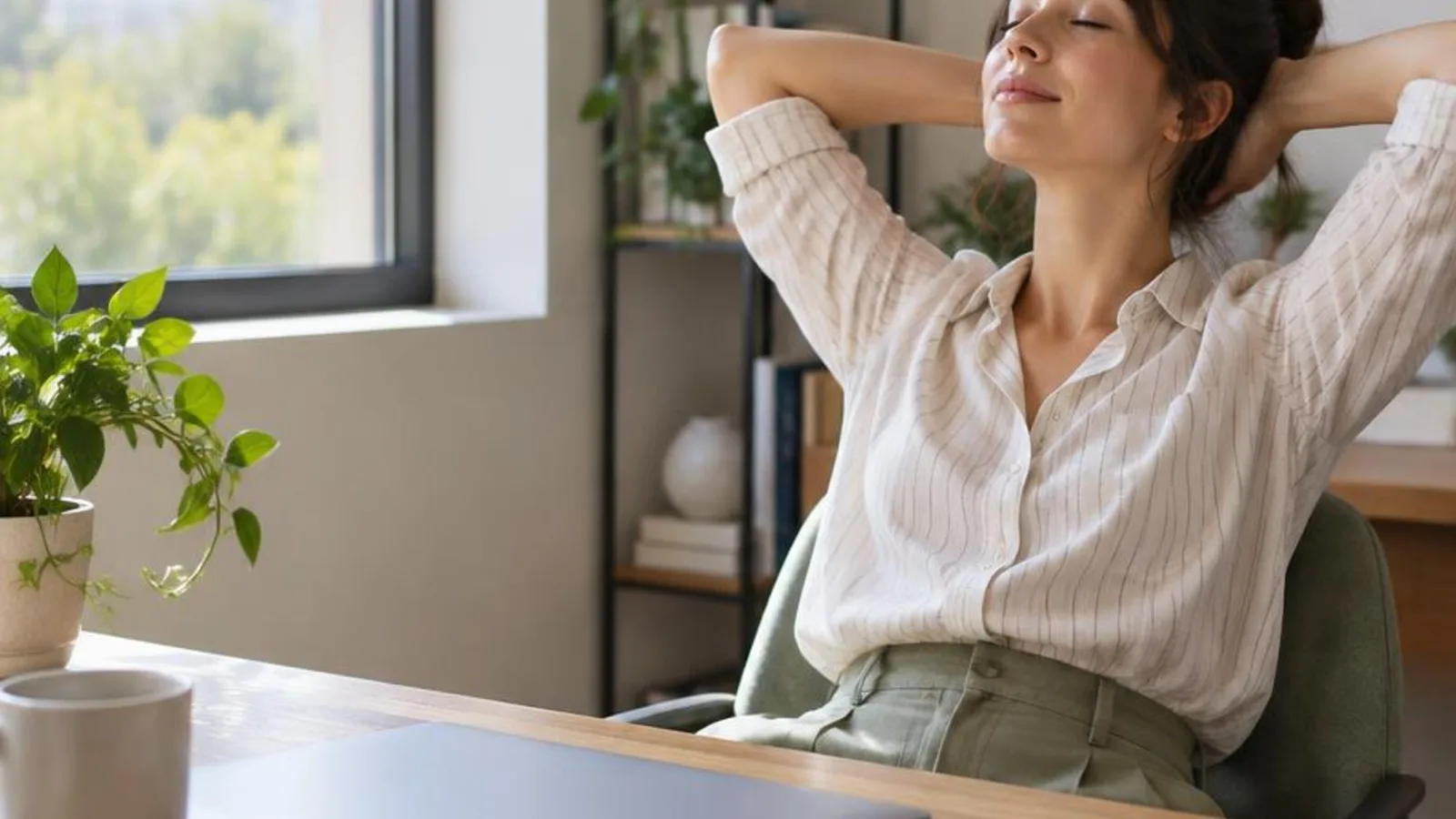
- Shoulder drop breath: inhale and shrug lightly, exhale and let the shoulders fall. Pair the drop with the out breath so your body learns the link.
- Nose only reset: breathe only through the nose for ten cycles while reading something low stakes. Mouth breathing often arrives with urgency; nose breathing slows the story.
- Temperature plus breath: hold a cool glass or rest wrists under cool water for a moment, then do four longer exhales. Sensory detail interrupts spiral thinking.
Car, hallway, and bathroom options
Some afternoons need privacy more than they need silence. A parked car, empty hallway, or bathroom stall counts as a practice space.
- Engine off reset: sit with both feet flat. Do eight longer exhales before you open any app or reply to a text.
- Steering wheel hold: press thumbs lightly into the wheel on the inhale, release on the exhale. Pressure becomes a metronome you can feel.
- Hallway lap: walk ten steps matching inhale to two steps and exhale to three. Arrive back at your door less braced.
- Stairwell pause: one flight up and down with attention only on footfall and breath. Movement plus breath breaks loops faster than sitting alone for some people.
- Stall sit: feet on the floor, longer exhale for one minute. It is not glamorous. It is available.
When thoughts argue with the breath
Anxious afternoons often come with a narrator that says this is pointless, you are behind, and everyone else is fine. Treat that voice as weather, not a judge with final authority.
- Name the loop once: planning, replaying, or predicting. Then return to counting.
- If you lose count, start again without a speech. Lost count is normal, not proof you failed.
- Pair breath with one kind sentence you can believe today, such as I can do the next small step.
- Limit the session. Three minutes done beats fifteen minutes avoided and resented.
- After the last breath, choose one physical next action under five minutes. Action closes the practice better than more analysis.
Building an afternoon menu you will actually use
Menus beat mandates. Choose based on where you are, not based on an ideal schedule you wrote on Sunday.
- After lunch: physiological sigh three times before you reopen mail.
- Before a hard call: box breath lite for two minutes with feet flat.
- Mid slump: longer exhale for six rounds at your desk while the cursor blinks.
- Commute home: engine off reset before you pull into traffic or onto the train platform.
- Evening handoff: shoulder drop breath while you change clothes or wash your hands.
- Weekend afternoon: try the stairwell or hallway version once so your body knows the pattern outside work.
What success actually looks like
Success is not a blank mind or a sudden burst of joy. Success is a slightly slower pulse, a jaw that unclenches, and a return to the task without the same urgency. Sometimes success is simply not sending the message you would have sent at minute two of the spiral.
Keep notes if it helps, but keep them boring. Date, which exercise, how many rounds, one word on how you felt after. Patterns show up faster than vibes.
Breathing exercises for anxious afternoons are practice for returning, not for becoming a different person overnight. Keep the bar low enough that pride cannot argue with it. One pattern. One trigger. Repeat until your body recognizes the cue. That is how an afternoon shifts from a free fall into something you can meet with a little more room in your ribs.